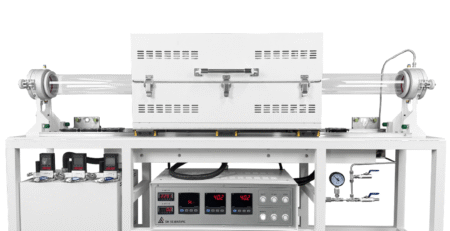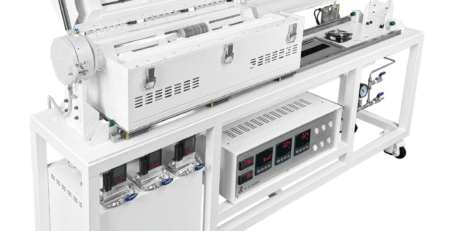
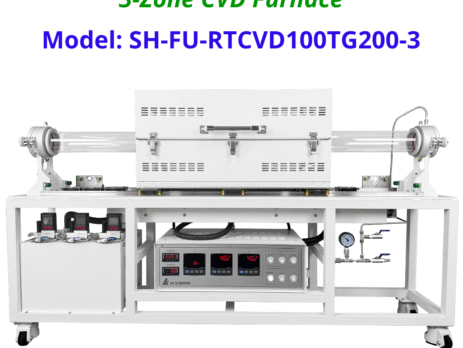
RTCVD furnaces are designed to support both rapid thermal RTCVD workflows and conventional CVD workflows. The operation guidance describes two operation modes: automatic mode optimized for rapid thermal RTCVD processes and manual mode optimized for conventional CVD processes.
When automatic mode is the right choice
Use automatic mode when the timing of exposure to the hot zone matters. In the automatic workflow, the furnace ramps and stabilizes, moves into position to begin rapid heating of the material, and then moves away to begin rapid cooling when the hold time ends.
This is a good match when you need repeatable timing across many runs and when you want rapid transitions to reduce uncontrolled tail-end reactions.
When manual mode is the right choice
Use manual mode when you want conventional ramp and soak behavior and when the process is not sensitive to rapid transitions. Manual mode is useful for longer holds, slow ramps, and recipes that prioritize steady-state conditions over rapid thermal transitions.
Practical advice for shared labs
- Document which mode is approved for each recipe
- Standardize purge and atmosphere conditioning steps before heating
- Train users on ramp guidance to protect heater elements
- If multiple users will share the tool, prioritize repeatability over maximum speed
Ramp guidance
For heater durability, the operation guidance recommends avoiding sharp, rapid increases in temperature and suggests about 15 C per minute as an ideal ramp-up rate.