Beyond 2500°C: The Dual-Product Revolution in Clean Hydrogen and High-Purity Graphite
By splitting methane (CH4) in an oxygen-free environment, this process yields pure hydrogen gas (2H2) and solid carbon (C).
But this “carbon” is not all the same. The value of this process, and its ability to solve critical supply chain issues, is determined entirely by the purity and structure of that final carbon product.
There is a vast difference between low-grade and high-value carbon:
- Low-Grade Carbon Black: This can be produced at relatively low temperatures (under 900°C). It is a commodity product, but it is not suitable for high-tech applications.
- High-Value Graphitic Carbon: This is the material required for advanced applications. The specifications are non-negotiable:
- Battery-Grade Graphite: Requires 99.95% or greater purity.
- Semiconductor/Optics-Grade Graphite: Demands extreme purity of 99.999% or greater with less than 10 ppm (parts per million) of metallic impurities.
To achieve this level of purity, the process must be catalyst-free. Any metallic catalyst (like nickel or iron) used to lower the reaction temperature will inevitably contaminate the final product, rendering it useless for semiconductor or advanced battery applications.
The 2500°C Threshold: Heat Becomes the Catalyst
So, how do you achieve a high-purity, catalyst-free reaction? The answer is temperature.
As confirmed by recent research (such as a 2025 review in the journal Energy & Environmental Science, [D4EE06191H]), at temperatures above 2500°C, the intense thermal energy alone is enough to drive the reaction efficiently. Heat itself becomes the catalyst.
At this “ultra-high” temperature, two crucial events occur:
- Catalyst-Free Purity: No metallic catalysts are needed, eliminating the primary source of contamination.
- Full Graphitization: The carbon atoms rearrange themselves into the highly ordered, crystalline structure of true graphite.
This non-catalytic, ultra-high-temperature process is the only known pathway to commercially produce 99.999% or greater pure graphitic carbon while co-producing clean hydrogen.
The Commercialization Wall: The Failure of Traditional Furnaces
This is where the technology faces a critical bottleneck. The most common tool for high-temperature processing is the traditional graphite furnace, which uses graphite resistance heating elements.
This technology is fundamentally unsuitable for this advanced application, not just technically but also economically.
- Temperature Limits: These furnaces struggle to reliably operate above 2000°C and are practically limited to 2500°C at best. They cannot sustain the 2500–3000°C range needed for full, consistent graphitization.
- Contamination Risk: The graphite heating elements themselves degrade, oxidize, and break down. This process releases carbon particles and impurities, actively contaminating the high-purity product.
- Crippling Total Cost of Ownership (TCO): The initial purchase price (CAPEX) of a traditional furnace is deceptive. Its true cost lies in the operational expenditure (OPEX): the constant purchase of replacement heating elements, the labor costs for maintenance, and the massive financial losses from process downtime.
The Breakthrough: The SH Scientific 3000°C Induction Furnace
The solution lies in a different heating technology: Induction Heating.
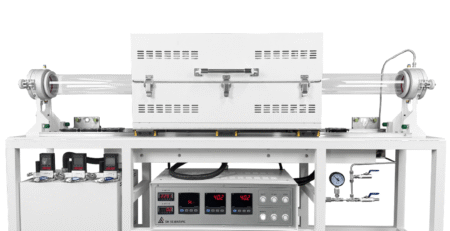
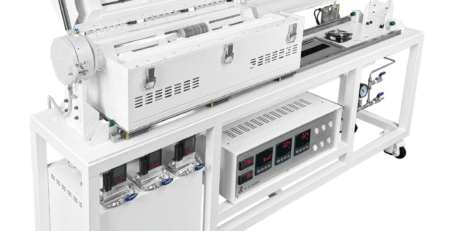
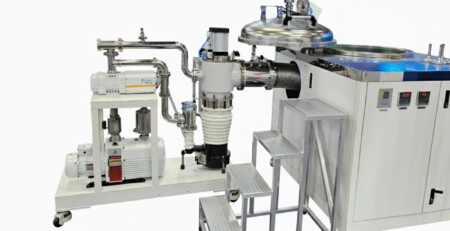
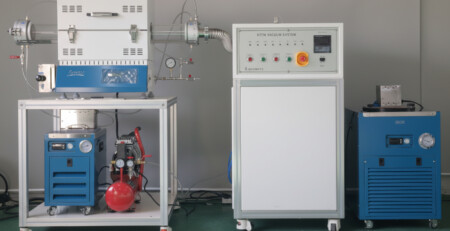
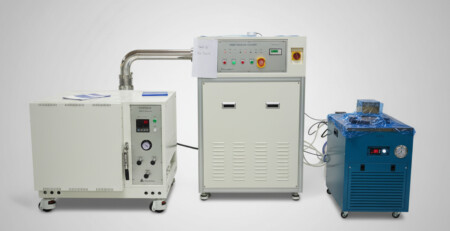
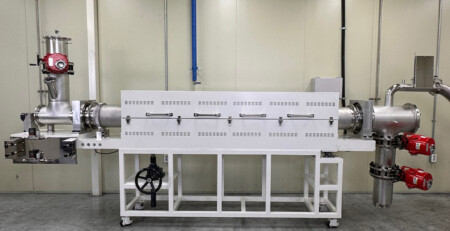
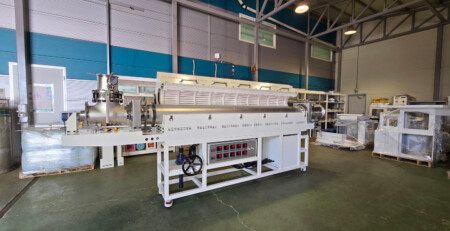
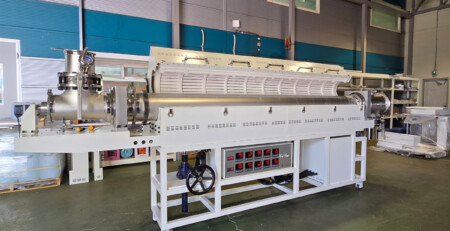
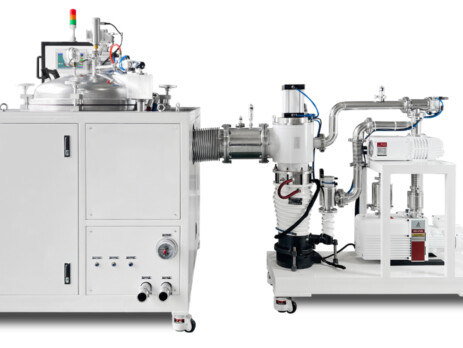
SH Scientific’s 3000°C Vacuum Induction Furnace is engineered specifically to overcome all the challenges that traditional furnaces cannot. It uses a powerful electromagnetic field to heat the material directly, eliminating the need for consumable heating elements.
This design provides the critical advantages needed for modern methane pyrolysis:
- Ultra-High Temperature Operation: It is designed to operate comfortably at 2500°C and all the way up to 3000°C, ensuring full graphitization.
- Absolute Purity via Thermal Uniformity: The induction design eliminates contamination from degrading elements. More importantly, it provides exceptional thermal uniformity across the entire reaction zone. This is critical: inconsistent heating leads to inconsistent graphitization, lower yields, and a final product that fails to meet purity specifications.
- Unmatched Durability & Low TCO: The semi-permanent induction coil is not a consumable. This design eliminates the primary failure point, slashing maintenance costs and maximizing uptime. The result is a dramatically lower and more predictable Total Cost of Ownership.
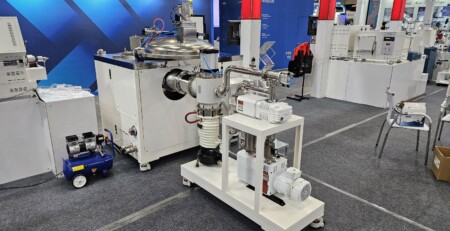
- Controlled Atmosphere & Process Integration: The system is a high-vacuum furnace (e.g., 10-4 torr) built to handle methane gas input, manage by-product outgassing, and facilitate the safe extraction of both solid carbon and hydrogen gas, making it ready for integration into a complete production line.
Unlocking the Research That Precedes Commercialization
The transition to electric vehicles and advanced semiconductors represents a multi-billion dollar opportunity. But before any giga-factory can be built, the fundamental science must be perfected.
This critical R&D work cannot be done with compromised tools. A traditional furnace is an instrument of compromise, guaranteeing contamination and limiting the scope of discovery.
SH Scientific’s 3000°C Vacuum Induction Furnace is a mandatory device for the science community investigating this field. It is engineered to provide the stable, ultra-pure, ultra-high-temperature environment necessary to conduct this vital research. It is the enabling tool that allows scientists to move beyond theoretical models and develop the foundational, scalable data that will one day unlock the new graphite and hydrogen economy.