The 3000C Mandate: Why Legacy Furnaces Invalidate High-Tech R&D
In today’s high-stakes semiconductor and advanced battery industries, research is defined by atomic-level purity. The new, non-negotiable benchmark is 5N (99.999%) to 6N (99.9999%) purity, a standard that has rendered traditional graphite resistance (Acheson) furnaces obsolete.
These legacy furnaces are no longer just inefficient; they are an active source of contamination and data invalidation. At SH Scientific, our research into this problem has directly driven the engineering of our advanced furnace solutions.
Here is a concise breakdown of the critical failures of legacy technology.
1. The Semiconductor “Glass Ceiling” (2500C)
Semiconductor-grade crucibles demand 5N-6N purity. Any impurity will leach into the molten silicon, causing chip failure. The problem is that traditional 2500C furnaces cannot remove the most damaging impurities: refractory carbides.
Impurities like Boron (B) and Titanium (Ti) form stable carbides that only vaporize at 2800C to 3000C. A 2500C furnace leaves these contaminants behind. Therefore, a 3000C capability is not “overkill”; it is the specific technical requirement to make clean semiconductor materials.
2. The Acheson Furnace Flaw: “Uneven” Heating
Battery anode performance is dictated by its crystal structure, or “degree of graphitization.” This optimal structure only forms at temperatures between 2500C and 3000C.
Legacy Acheson furnaces are notorious for severe thermal non-uniformity, with documented “uneven temperature distributing” and “gradients”. This thermal chaos creates an inconsistent product within the same batch, making R&D data non-repeatable and worthless. Precision control, like the “+/- 1C” of a modern furnace, is essential for valid science.
3. The Catalytic Killer: Self-Contamination
Traditional furnace heating elements are “consumable” and “thermally decay,” releasing “graphite dust” and “Fe metal impurities” into the chamber. In battery R&D, this iron is a catalyst for “parasitic reactions” that consume the electrolyte and can lead to “thermal runaway”: a catastrophic cell fire.
Worse, this contamination creates false positives.
A 2024 study found that “promising initial cycling” was actually an illusion caused entirely by a “competing side reaction” from an iron impurity. The “dirty” furnace had invalidated the entire experiment.
4. The Checkmate: Structural Obsolescence
The final, definitive failure is in the design. To remove boron for semiconductor-grade graphite, corrosive halogen gases (Chlorine or Freon) are mandatory.
A traditional resistance furnace, with its exposed internal elements, would be catastrophically degraded by this process. It would destroy itself. The only furnace design suitable for this process is a Vacuum Induction Furnace. Its non-contact heating coil is outside the chamber, allowing it to safely heat a “closed retort” or “encapsulated” hot zone, protecting the components.
The evidence is clear: legacy furnaces are technically disqualified from serious semiconductor and battery R&D. They fail on five key points:
- Incompatible Design: Cannot handle mandatory halogen gas purification.
- Self-Contamination: Introduce iron and graphite dust.
- Insufficient Temperature (Purity): Cannot break down 3000C refractory carbides.
- Insufficient Temperature (Synthesis): Cannot create high-performance 2500C+ graphite crystals.
- Invalidated Data: “Uneven” heating makes results non-repeatable.
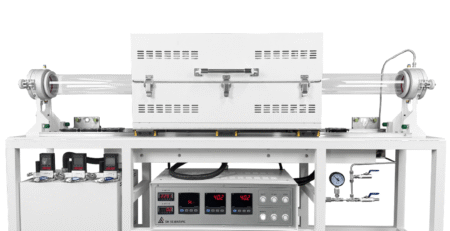
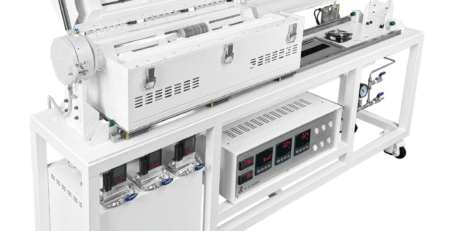
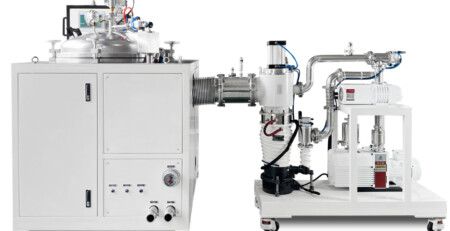
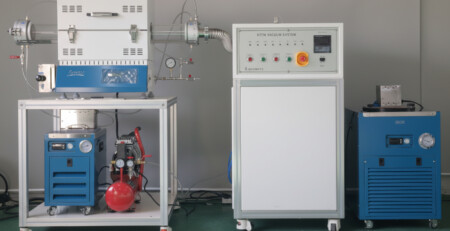
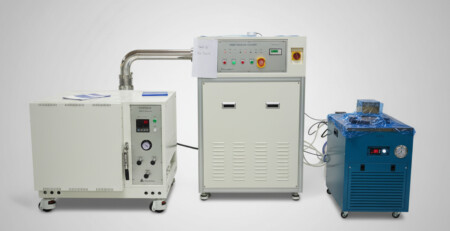
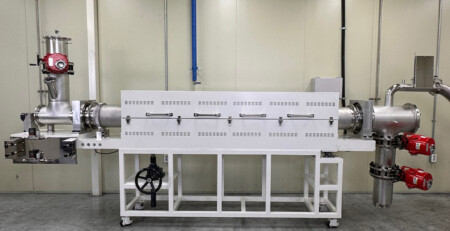
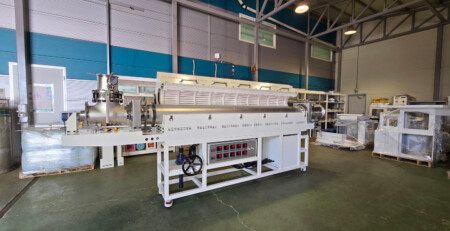
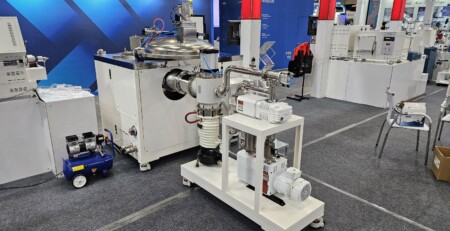
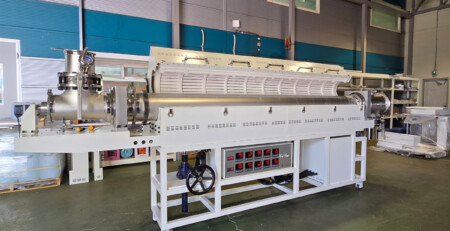
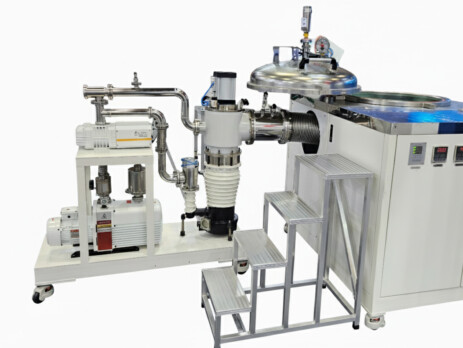
At SH Scientific, we studied these failure points and engineered the direct solution. The SH Scientific 3000C Vacuum Induction Furnace is the platform for modern materials science precisely because it solves all five of these challenges. Its 3000C capability, non-contact induction design, and precision PID control (+/- 1C) provide the clean, stable, and reliable foundation that modern R&D demands.