Semiconductor fabs rely on plasma etching and CVD chambers to create the fine features used in advanced devices. Inside those chambers, ceramic components like focus rings, nozzles, chamber liners, ESCs (electrostatic chucks), and showerheads are exposed to aggressive halogen plasmas (including CF₄, SF₆, and Cl-based chemistries), high-energy ion bombardment, and severe thermal cycling.
When conventional ceramics erode, the resulting particle contamination, process drift, and unexpected downtime cost fabs dearly. To maximize tool uptime, chamber-part developers are moving beyond standard alumina toward advanced rare-earth ceramics like yttria (Y₂O₃) and yttrium aluminum garnet (YAG).
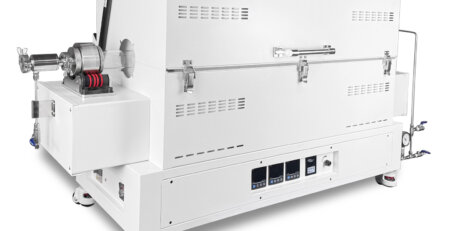
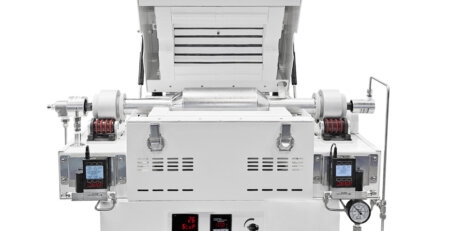
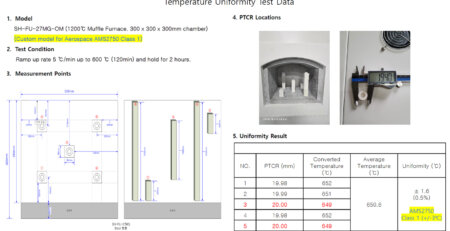
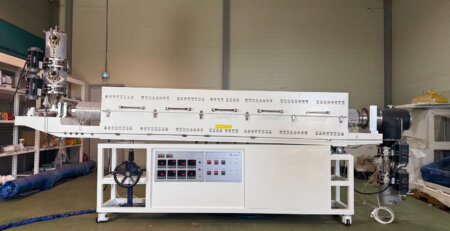
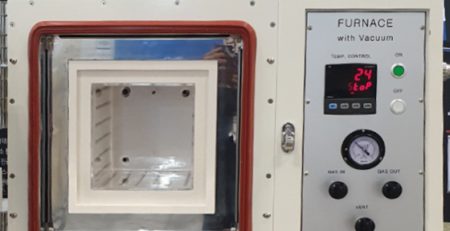
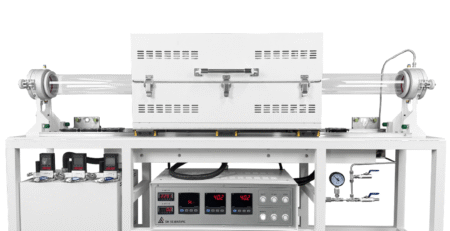
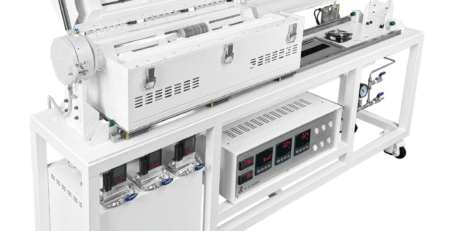
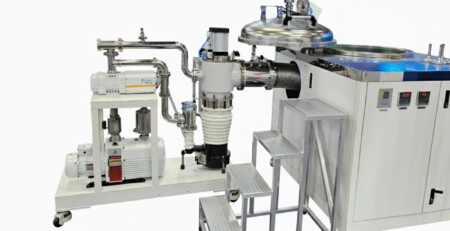
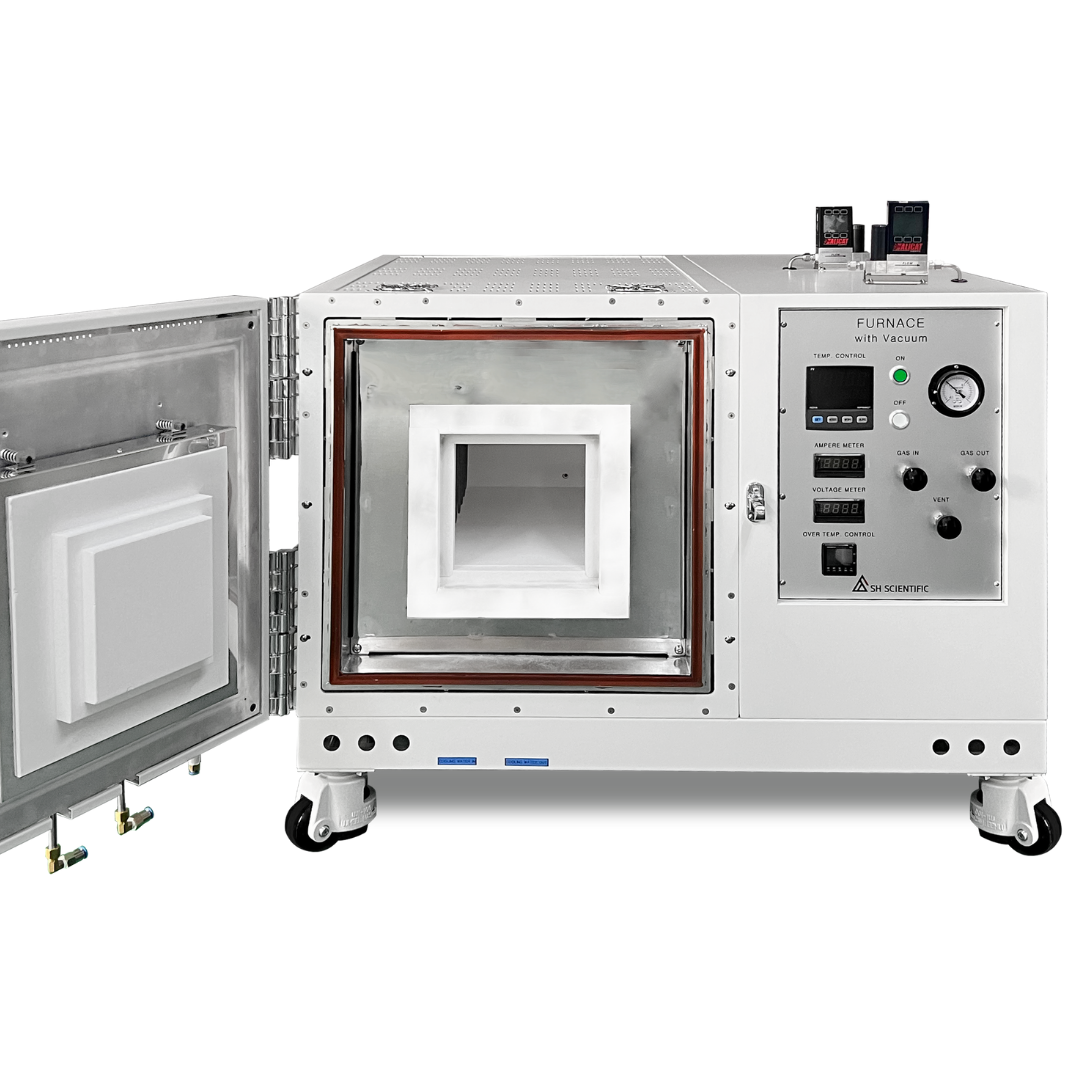
SH Scientific’s high-temperature and vacuum muffle furnaces support R&D and process development for these next-generation materials, provided the selected model is matched to the required temperature, atmosphere, vacuum level, and hold time.
Comparing Key Chamber-Part Ceramics
Al₂O₃: The Legacy Standard
Alumina is cost-effective, mechanically strong, and well-understood. While it remains a practical choice for legacy designs or lower-exposure areas, alumina generally shows higher erosion than yttria-based materials in many fluorine-rich plasma environments, which can shorten service life in high-exposure zones.
- Typical Process: High-temperature air sintering.
- Recommended Equipment: SH FU 1800°C-class high-temperature muffle furnace for many alumina sintering schedules; SH FU 1500°C-class models may be suitable for lower-temperature calcining, presintering, or validated lower-temperature cycles.
Y₂O₃: The Plasma-Resistance Upgrade
The “Y” in Y₂O₃ stands for yttrium, a rare-earth element that provides exceptional resistance to halogen plasma. For highly exposed chamber zones, yttria can substantially outlast alumina in many fluorine-rich plasma applications, although the exact lifetime improvement depends on the plasma recipe, bias power, part geometry, density, and surface condition. Because it has lower mechanical toughness than alumina, developers are also exploring yttria-based composites (like Y₂O₃-ZrO2 and Y₂O₃-MgO) to balance plasma resistance with machinability.
- Typical Process: Air sintering for opaque parts; vacuum sintering for transparent optical parts.
- Recommended Equipment: SH FU 1800°C / 1900°C-class muffle furnace for opaque Y₂O₃, depending on the validated hold temperature; for transparent Y₂O₃, verify that the selected vacuum furnace is rated for the required active-vacuum temperature.
YAG: The Next-Generation Balance
YAG, short for yttrium aluminum garnet (Y₃Al₅O₁₂), is a garnet-structure ceramic composed of yttrium, aluminum, and oxygen. It is being developed as a balanced ceramic option that can offer strong plasma resistance along with useful mechanical and processing advantages. For optical-grade transparent YAG, strict processing is required to eliminate residual porosity.
- Typical Process: Vacuum sintering followed by air annealing.
- Recommended Equipment: SH 1900°C vacuum muffle furnace platform only after confirming that the selected model is rated for the required YAG sintering temperature under the required vacuum or gas condition.
Air vs. Vacuum: What Does Your Process Require?
Furnace atmosphere should be selected based on the part’s final application and optical requirements.
- Opaque Chamber Parts: Components where density and erosion resistance matter more than light transmission (e.g., standard rings, liners, shields) can usually be processed in high-temperature air muffle furnaces.
- Transparent Ceramics: Optical-grade Y₂O₃ and YAG often require vacuum sintering, HIP, and/or controlled annealing to reduce residual porosity and manage oxygen-related defects.
Material-by-Material Process Map
Note: The ranges below are application guidelines. Always confirm required temperatures and atmospheres before selecting equipment.
| Material | Melting Point | Sintering Temp | Atmosphere | Post Process | Recommended SH Model |
|---|---|---|---|---|---|
| Al2O3 | 2050°C | 1450 to 1750°C | Air | None | SH FU 1500°C / 1800°C Muffle |
| Y2O3 (Opaque) | 2430°C | 1650 to 1850°C | Air | None | SH FU 1800°C / 1900°C Muffle |
| Y2O3 (Transparent) | 2430°C | 1650 to 1850°C | Vacuum | HIP (Optional) | SH FU 1900°C Vacuum Muffle |
| YAG (Transparent/Reactive) | 1970°C | 1700 to 1780°C | High Vacuum | Air anneal at approx 1400°C | SH FU 1900°C Vacuum Muffle* |
* For YAG and transparent Y₂O₃ processes, confirm the selected model’s rated temperature under active vacuum, gas backfill, and air/O₂ annealing. Do not assume the headline maximum temperature applies under every atmosphere.
Example R&D Workflow: Transparent YAG
Developing transparent YAG requires multi-step processing to achieve optical clarity. A programmable vacuum muffle furnace simplifies this workflow by handling atmosphere transitions in a single run.
- Powder Preparation & Forming: Y₂O₃ and Al₂O₃ powders are mixed with dopants and pressed or cast into a green body.
- Vacuum Sintering: The compact is heated under a controlled vacuum to promote extreme densification and pore removal.
- Atmosphere Transition: The chamber is vented or backfilled with gas according to the proprietary recipe.
- Air Annealing: The sintered ceramic is annealed in an air/oxygen atmosphere to adjust defect chemistry and improve final optical performance.
Configure the Right SH Furnace for Your Process
Developing advanced ceramics for semiconductor chambers requires more than just a high maximum temperature rating. Your furnace must match your process atmosphere, density targets, and production workflow.
Whether you are sintering opaque alumina in air or developing transparent YAG ceramics under vacuum, SH Scientific can help you configure the exact chamber size, pump package, and gas-handling options you need.