A research-scale approach to optimizing gas-solid kinetics in controlled atmospheres
Bauxite residue, commonly known as red mud, is a highly alkaline, iron-rich byproduct of Bayer process alumina refining. As industries push toward circular economies and low-carbon metallurgy, red mud has become a primary focus for researchers studying waste valorization, iron recovery, and alternative reduction processes.
A critical area of this research involves reducing the iron oxide phases within red mud using hydrogen or syngas. In these studies, simply heating the material is not enough; the objective is to understand the precise reduction kinetics when these oxides are exposed to controlled reducing atmospheres at elevated temperatures.
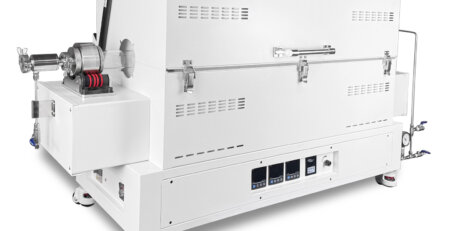
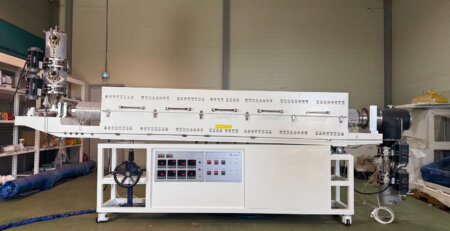
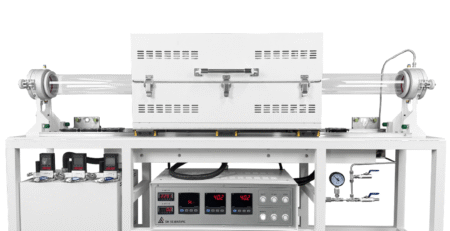
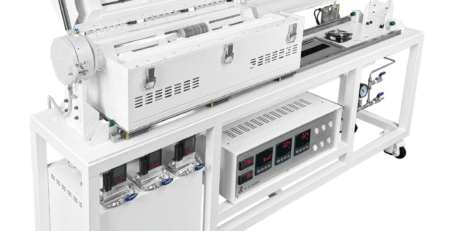
For this tier of materials research, a rotary tube furnace is often the most practical platform. It allows laboratories to strictly control temperature profiles, gas atmospheres, residence times, and powder agitation in a highly repeatable manner.
Why Red Mud Reduction Outgrows Standard Furnaces
Red mud is typically processed as a fine powder, dried slurry, or pelletized solid. For efficient reduction, the hydrogen or syngas must maintain consistent contact with the sample’s surface area while the material is held at the target temperature.
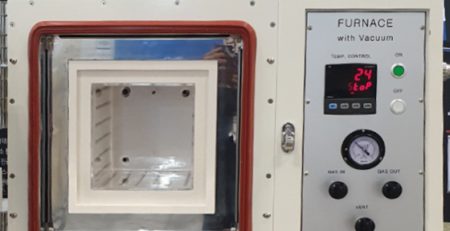
In a static tube or muffle furnace, powders sit in a fixed bed. This creates diffusion-limited reactions: the gas reacts with the top layer of the powder, but struggles to penetrate the bed. This results in uneven reaction boundaries across the sample, making it difficult to extract reliable, reproducible data from run to run.
A rotary tube furnace eliminates this bottleneck by keeping the material in constant motion. As the tube rotates, the sample continuously tumbles through the hot zone. This prevents agglomeration, exposes fresh particulate surfaces to the process gas, maximizes mass transfer, and ensures strict thermal uniformity.
This dynamic environment is essential when researchers need to compare variables such as:
- Hydrogen vs. syngas atmospheres
- Powder vs. pelletized sample morphologies
- Variable residence times and reduction temperatures
- Gas flow rates and partial pressures
- Post-process phase identification and magnetic separation yields
The Typical Research Workflow
A red mud reduction study relies on a tightly controlled sequence of events.
First, the sample is loaded into the furnace tube and hermetically sealed. Ambient air is evacuated via a vacuum pump and/or displaced through inert gas purging (typically nitrogen or argon) to prevent premature oxidation or explosive hazards. Once the baseline atmosphere is established, the reducing gas (hydrogen or syngas) is introduced.
During the heating profile, the rotary motion ensures the material tumbles evenly through the hot zone. As the reduction reaction proceeds, off-gases like water vapor are generated. Because this alters the internal gas chemistry and can create positive pressure, the system requires precise back-pressure regulation and pressure relief mechanisms.
Following reduction, the system must be cooled under an inert atmosphere to prevent the newly reduced metallic phases from re-oxidizing. The processed sample is then recovered for downstream analysis, such as X-ray diffraction (XRD) phase identification or magnetic separation.
Why SH Scientific’s Rotary Furnace is an Ideal Fit
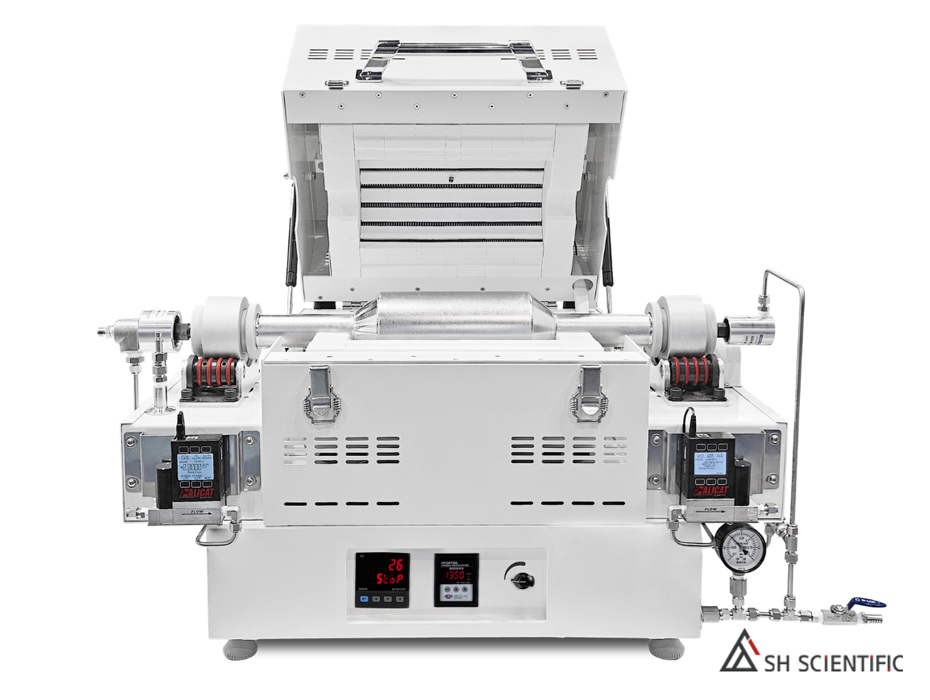
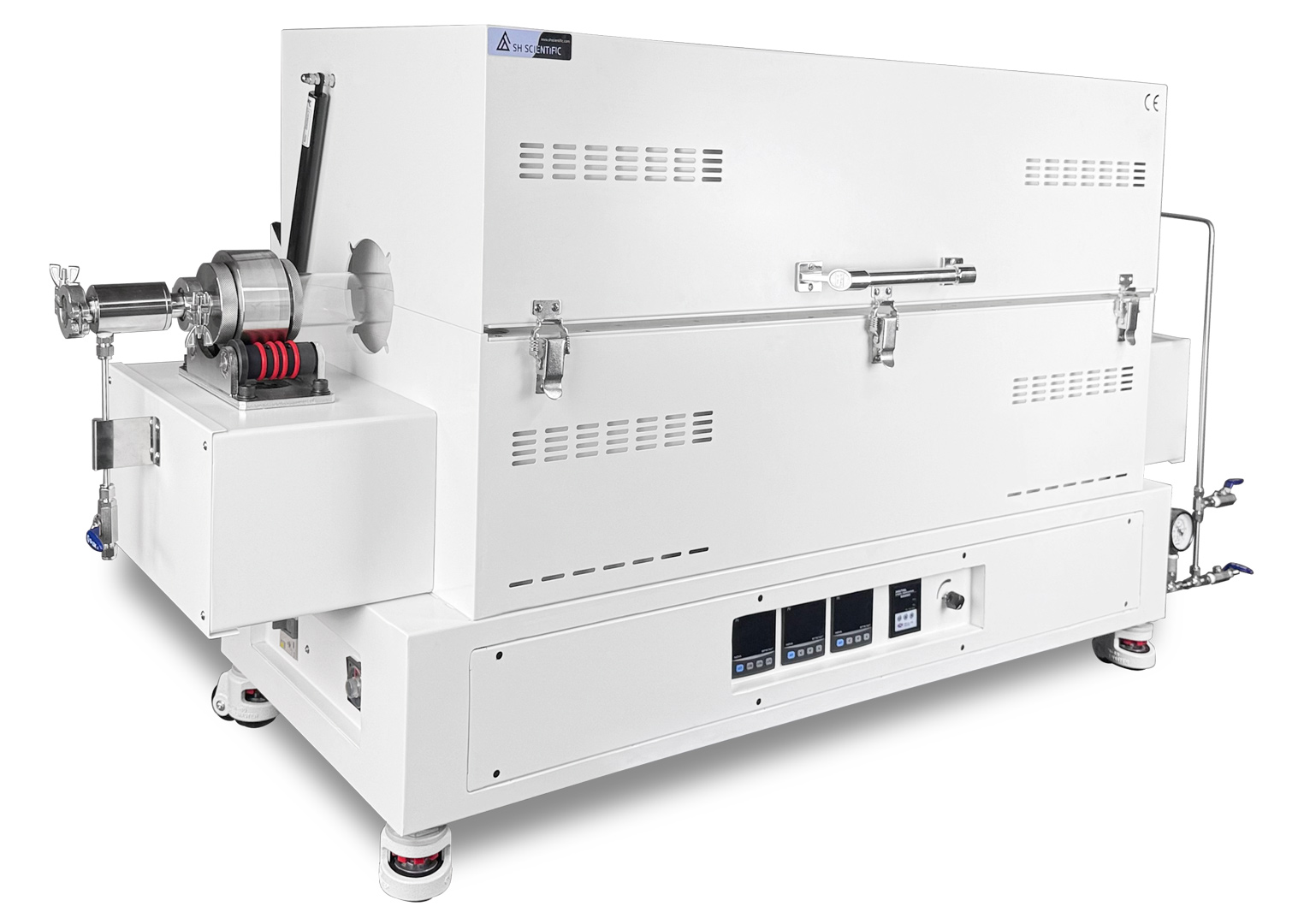
SH Scientific’s batch rotary tube furnaces are engineered specifically around the realities of powder metallurgy, atmosphere control, and practical lab workflows.
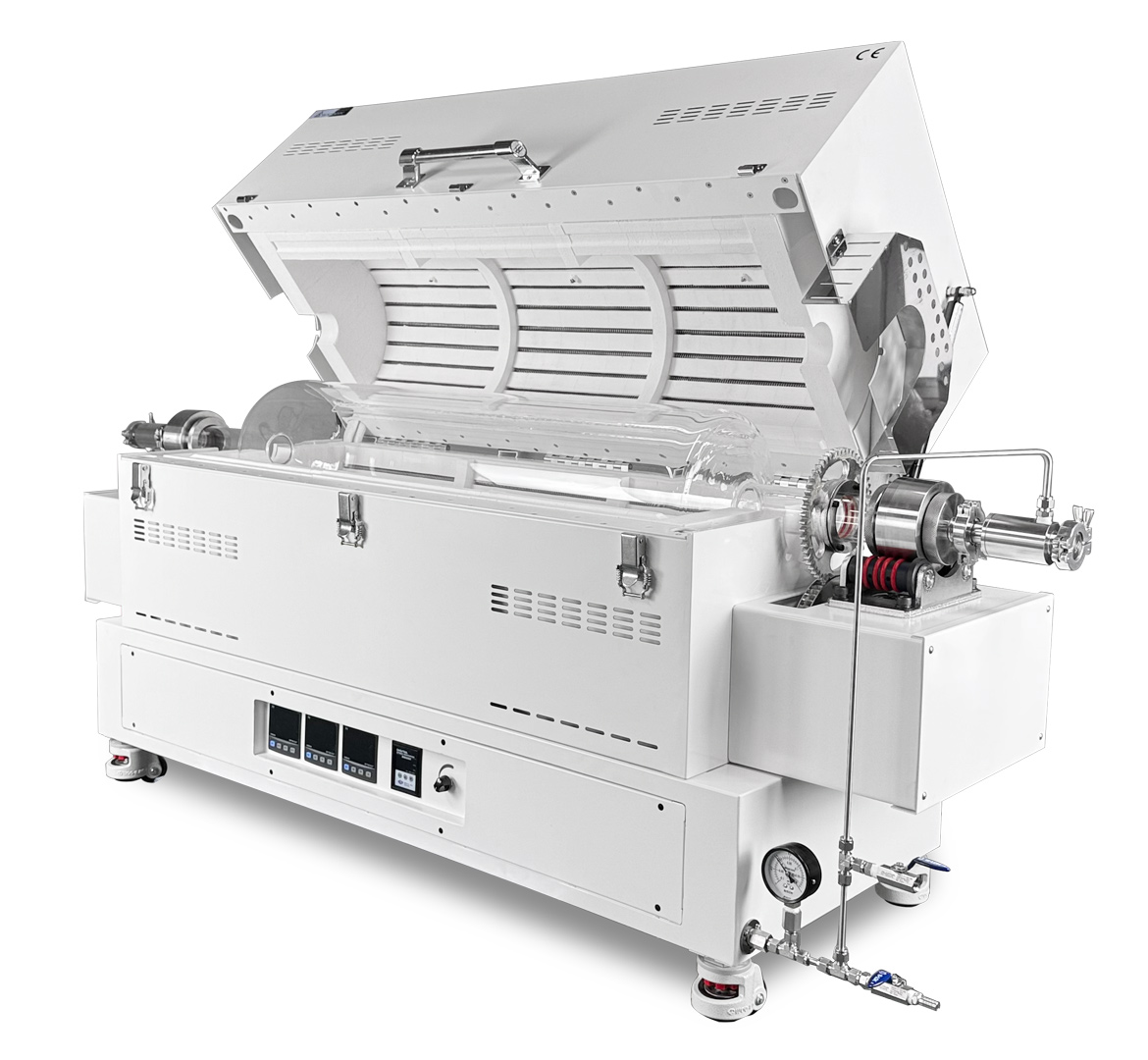
The primary advantage is the optimization of gas-solid contact. To address highly dispersible or fine powders that might simply slide along the tube wall rather than tumble, SH Scientific integrates internal baffles. These baffles force mechanical mixing, ensuring total surface exposure to the reducing gas.
Sample retention is another common laboratory hurdle. Red mud powders easily drift out of the hot zone during prolonged rotation. SH Scientific utilizes a proprietary barrier design that restricts the material strictly to the heated zone, ensuring uniform thermal treatment and maximizing yield for post-run analysis. Coupled with a quick-open end cap and an accessible tube release structure, researchers spend less time loading and recovering material, and more time analyzing data.
For atmosphere-sensitive runs, the gas-tight sealing structure reliably supports deep vacuum purging, inert gas blanketing, and slight positive-pressure operation. This makes it a vastly superior platform compared to basic or loosely sealed heating setups.
Atmosphere Control and Safety Considerations
Hydrogen and syngas protocols require uncompromising safety and system design. The fundamental requirement is the safe displacement of oxygen, precise flow control, and managed off-gas exhaust.
A research-grade configuration typically integrates Mass Flow Controllers (MFCs) for precise gas blending, back-pressure regulators, robust inlet/outlet porting, and dedicated exhaust routing. For hydrogen-rich or 100% hydrogen environments, researchers must implement strict purge sequences, leak detection, and facility safety interlocks (such as ambient H2 monitors). If syngas is utilized, carbon monoxide (CO) detection and high-capacity facility ventilation are mandatory.
SH Scientific does not treat these systems as “one-size-fits-all” commodities; rather, the furnace is configured specifically around the facility’s safety infrastructure and the researcher’s exact gas requirements.
A Practical Platform for Scaling Up
For most materials science laboratories, the 120RTG300 series serves as the optimal starting point for batch rotary reduction studies, with larger configurations available for high-capacity processing or extended heat zones.
Depending on the target yield, researchers can choose from a range of processing capacity models. The recommended fill rate per batch is between 10% and 20% of the full capacity to ensure optimal tumbling and gas-solid contact.
| Model | Heating Zone | Full Capacity | Est. Volume per Batch (at 15% Fill Rate) |
|---|---|---|---|
| SH-FU-120RTG300 | Single Zone | 2 Liters | 0.3 Liters |
| SH-FU-200RTG300 | Single Zone | 8 Liters | 1.2 Liters |
| SH-FU-250RTG300 | Single Zone | 12 Liters | 1.8 Liters |
| SH-FU-120RTG900 | 3 Zone | 8 Liters | 1.2 Liters |
| SH-FU-200RTG900 | 3 Zone | 32 Liters | 4.8 Liters |
| SH-FU-250RTG900 | 3 Zone | 36 Liters | 5.4 Liters |
Note: The calculation above assumes a reference specific gravity of 1 g/cm³ (where 1 liter equals 1 kg). If a sample with a higher or lower specific gravity is used, the actual mass yield (kg) per batch will vary accordingly.
Request a Configuration Review
Red mud reduction parameters vary widely based on raw material chemistry, target metallization rates, and facility safety protocols. SH Scientific engineers are available to review your specific bauxite residue research goals and configure a rotary furnace optimized for your hydrogen, syngas, or inert gas workflows.